Sardis
Lydia
Struck the first coins in electrum from the Pactolus and used them to pay men to fight. Richest court of the age, and the shortest-lived.
Electrum · mercenaries
The first coin ever struck was payment for an army.
Twenty-six centuries later, the hammer has not stopped.
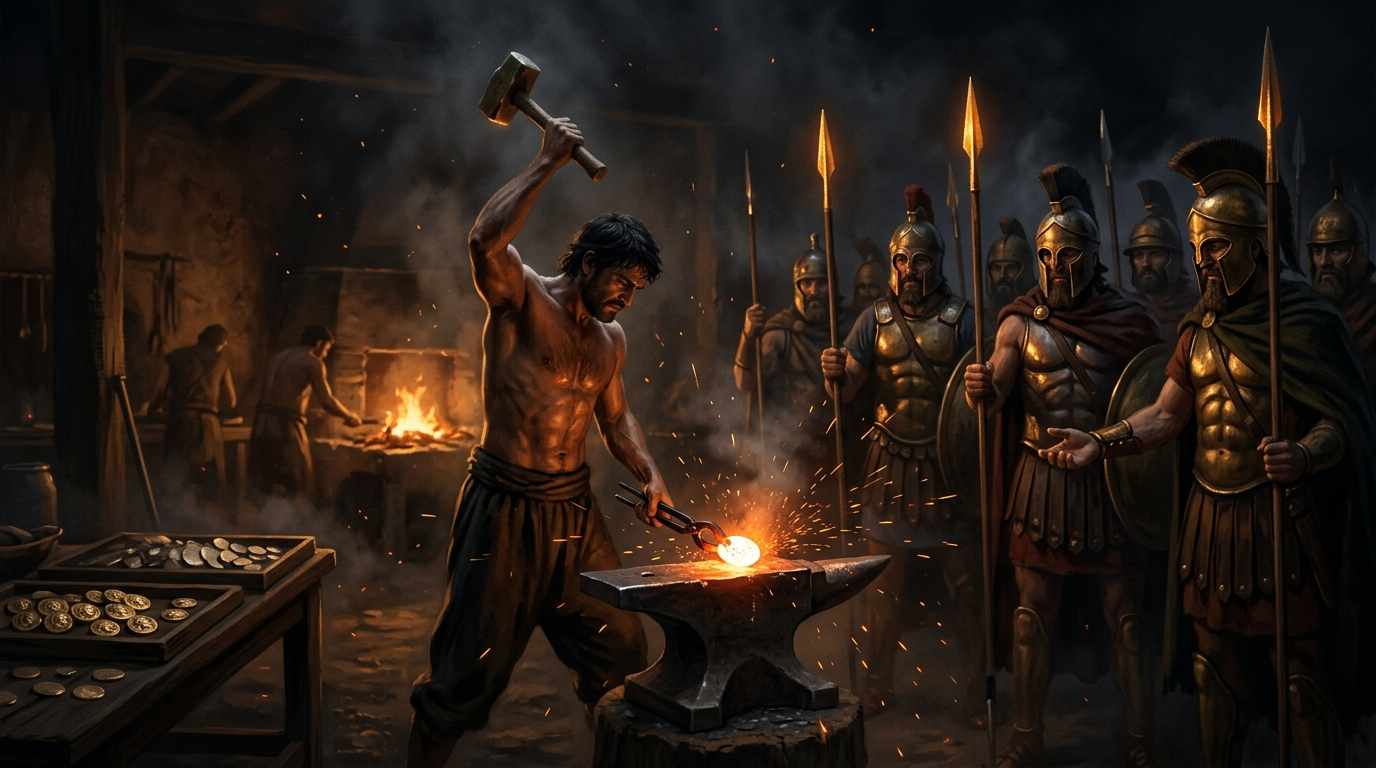
Around 610 BC, in the Lydian capital of Sardis, a king began stamping lumps of electrum with his royal seal. Not to make markets easier — merchants had managed for three thousand years without him. He did it because an army has to be paid in something exact, portable, and impossible to argue with.
The river had been carrying it down for a thousand years.
Lydia was simply the first kingdom to stop and pick it up.
Every era changed the metal and kept the mechanism: what is guaranteed, and by whom.
King Alyattes strikes the first coins from river alloy. The lion of his dynasty says: this weight is mine, and I stand behind it.
Croesus splits the alloy into pure gold and pure silver — the first bimetallic currency in history. Lion and bull, locked face to face on every coin he strikes.
Athens takes the Lydian invention and gives it a face. The owl of the idol Athena, struck in Laurion silver, becomes the first coin accepted far beyond the borders of the state that made it.
The metal finally disappears. The guarantee doesn't — it just stops needing a king. Consensus signs the coin now.
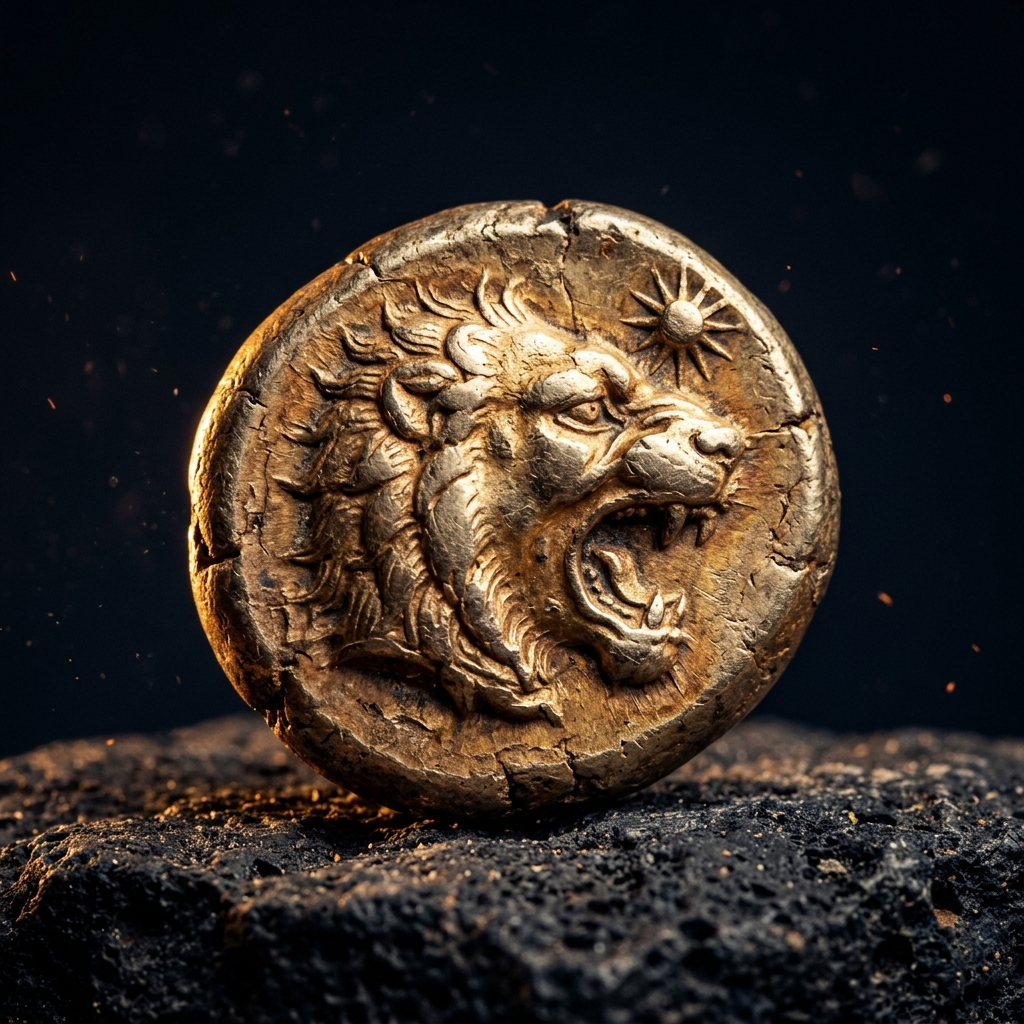
Rough, oval, barely round. It never needed to be beautiful — it needed to be trusted. It was, and the idea never left.
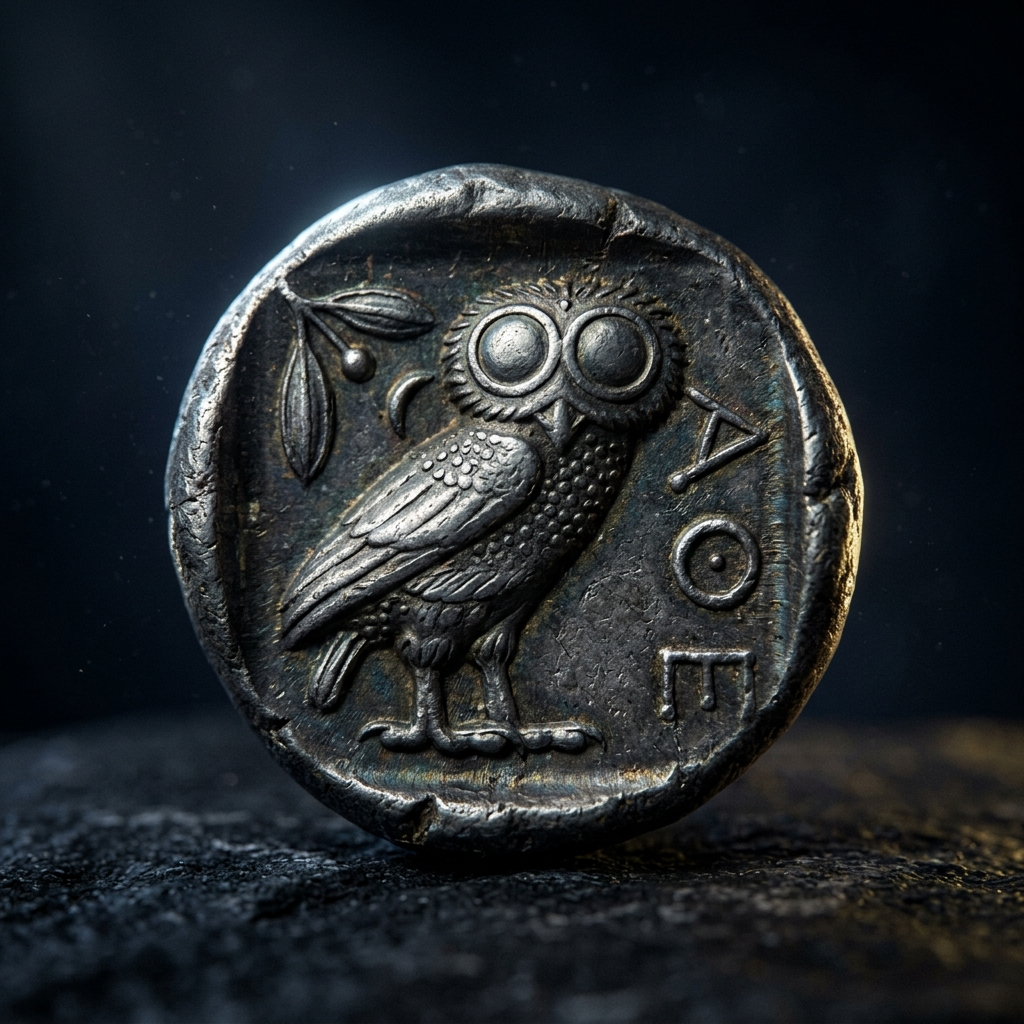
Traders simply called them owls. They passed from Sicily to the Levant on reputation alone — money's first network effect.
Athens put an owl on its silver because the owl belonged to the idol Athena — and Athena did not stand for peace. She stood for war waged with judgement instead of rage. Every tetradrachm that crossed the Mediterranean carried that argument on its face.
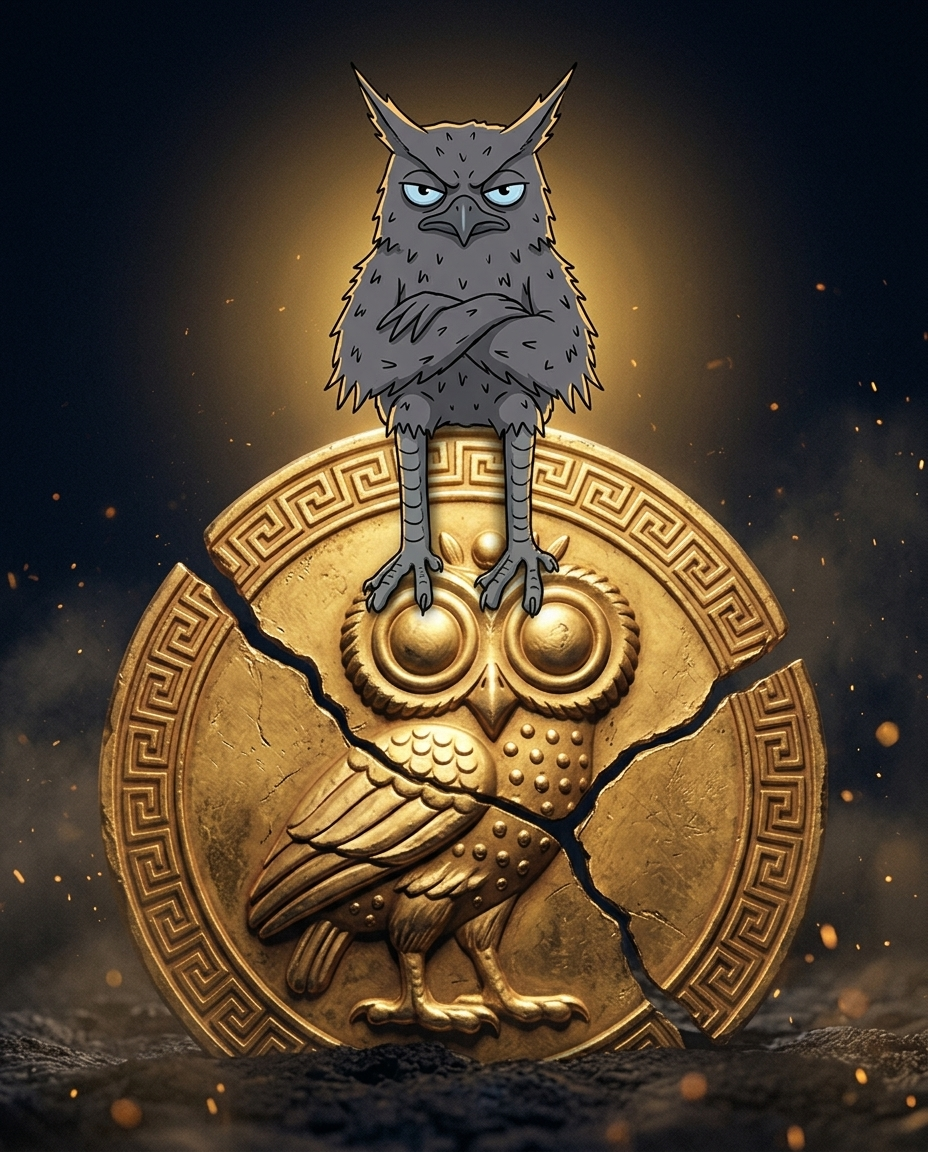
The Keeper is that owl, still awake. He has watched every currency in history get struck, circulate, debase and vanish — and he keeps striking anyway, because the fragments are the only record that survives.
Time is never lost. It fragments — and whoever can read the metal can put it back together.
Six of them, all alive at once, all within reach of each other. One had just invented money. One had the silver. One had the army that would swallow the first. None of them knew which way it would go.
Struck the first coins in electrum from the Pactolus and used them to pay men to fight. Richest court of the age, and the shortest-lived.
Took the invention, put the owl on it, and dug the silver of Laurion to feed it. Their heavy infantry was the finest and the most expensive on the board.
Cyrus came west, took Sardis in 546 BC and inherited the mint along with the kingdom. The empire that ends the Lydian question.
Immense wealth and no coinage at all — silver weighed out by the shekel, temple credit, written debt. Proof that money and coin are not the same thing.
Amasis on the throne, Greek mercenaries in the ranks, and an alliance with Croesus that arrived too late to save him. Grain, gold, and hired spears.
The riders who had already burned Sardis once, a generation before the first coin was struck. They take tribute in metal and answer to no mint.
Six seats. One board. The pieces are already on it.
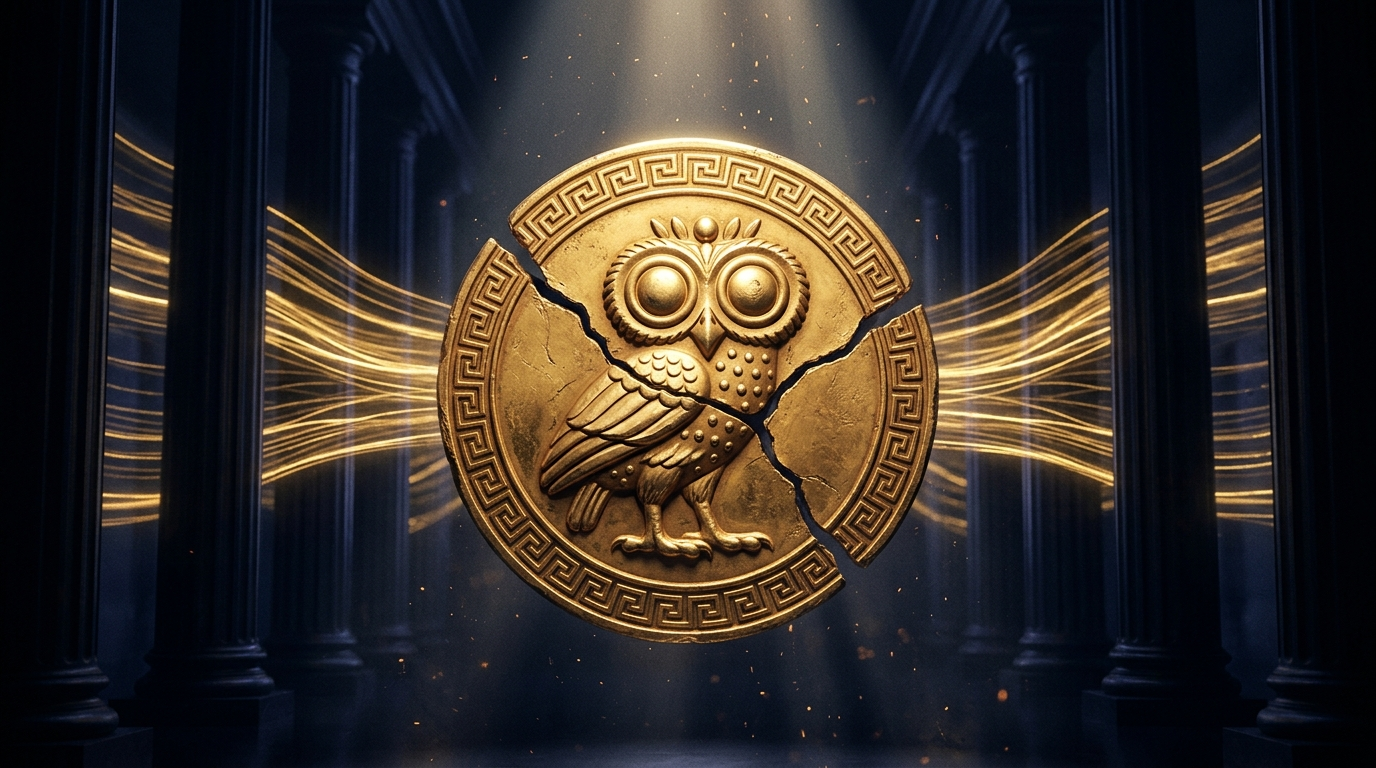
Alyattes needed a crown to guarantee a weight. Twenty-six centuries later the guarantee holds without one — consensus signs the coin, and the fissure is part of the design.
$TFC. Struck once, 589,000,000, issuer blackholed.
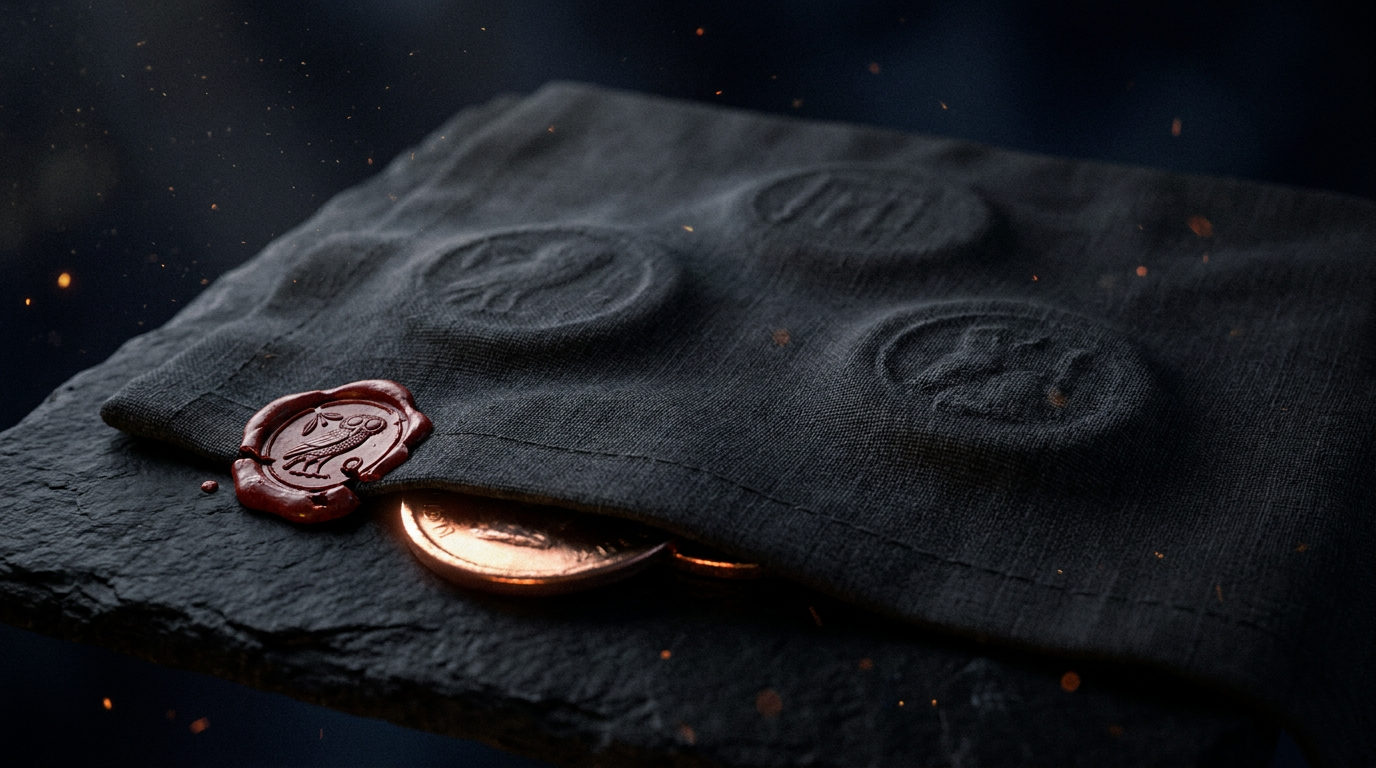
Longum innumerabilemque tempus cuncta in lucem profert et prolata condit. Long, uncountable time brings all things to light — and buries them again once brought. Sophocles · Ajax · Athens, c. 445 BC
589,000,000. Not a round number, and not an accident — the people who read ledgers will recognise it. Two of the three team tranches sit in on-chain escrow and unlock back in slices over time, not in one block.
Every prized duel and tournament of the Lydian Gambit runs on the same simple circuit.
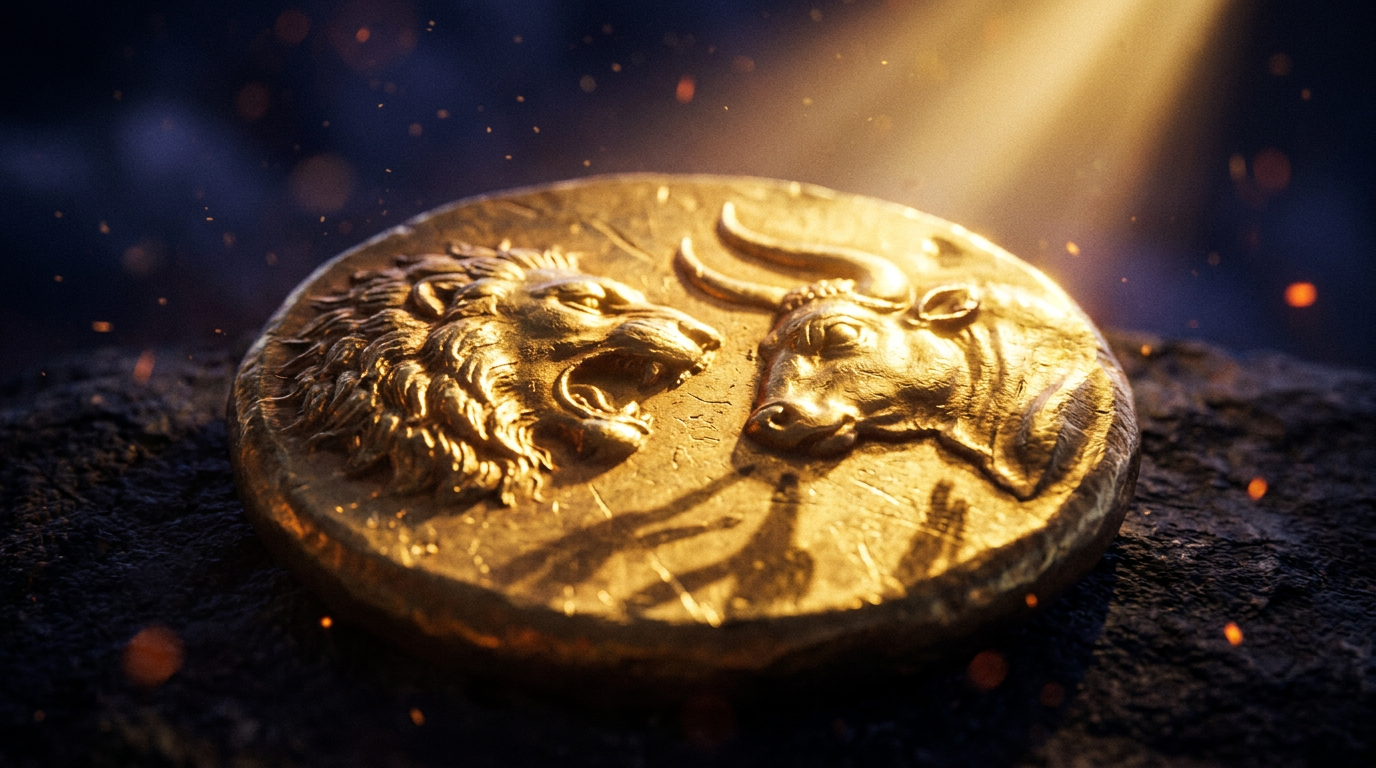
Croesus struck a lion and a bull nose to nose on every coin he ever made, and never once said which of them wins. That argument is two and a half thousand years overdue.
Coins were invented to move armies. When it opens, $TFC is what you march with — and the fragments will decide what you march with it in.
The seal is cracked. The board is real, the clocks are running, and all six powers — Lydia, the Greek poleis, Persia, Babylon, Egypt and the Scythians — field their armies. The war opens in your browser or on your phone: no account needed.
Hex terrain between two capitals — plains, hills, a river with fords, mines worth holding. Seven unit types per power, from spearmen to horse archers to the caravan that feeds your treasury.
Two action points a turn, one recruit, one promotion. Move, strike, and end before your flag falls — five minutes on the clock, chess-style, with increment.
Take the enemy General’s head, amass 120 electrum, or hold the stronger board when forty turns have passed. Fully deterministic — no dice, no luck, only judgement.
One fixed entry fee, one fixed prize. The house escrows the prize on the XRP Ledger before the match even begins — win, and it settles to you within seconds.