How the prize loop settles on the XRP Ledger, how the board is fought, what every unit costs and kills, and what the two opening powers bring to the sand.
The Lydian Gambit never puts players' money against each other. You pay one fixed entry fee for your seat — that is the price of the service, and it is all you can ever spend. Every prize is a fixed amount owed by the house, published in advance and locked in an XRPL escrow before the match reveals. Nothing depends on how much anyone else paid. Win, and the ledger itself releases your prize — no claim, no delay, no discretion.
A seat costs 150 $TFC — duel or tournament alike. Signed from your own wallet, on the XRP Ledger, before the match starts. That is the only transaction you will ever sign to compete.
Before a prized duel begins, the house locks the full 250 $TFC prize in conditional XRPL escrows — one per player, each releasable only by that player's victory. The funds leave the house's hands before the first move. You can verify the escrow on any XRPL explorer.
Registration is free. When the bracket fills, a confirmation window opens and every player signs their entry fee. Only when all seats are confirmed does the tournament lock — if the window expires, every fee already paid is refunded in full, automatically. Nobody ever pays for a tournament that doesn't launch.
The moment a tournament locks, the house escrows the entire prize pool on-chain — a public proof that the reserve exists before a single match is played. Seeding follows the Elo ladder. Semi-final and final prizes are paid the instant each result is sealed.
The winner's escrow is finished on-chain the moment the match ends; the loser's returns to the house. After each settled match, part of the house's revenue is burned — sent to the issuer, permanently out of supply. Match after match.
| Format | Entry fee | Prizes (fixed, from the house) | Burned |
|---|---|---|---|
| Duel | 150 | 250 to the winner | 25 |
| Tournament · 4 | 150 | 400 gold · 150 silver | 25 |
| Tournament · 8 | 150 | 600 gold · 250 silver · 100 × 2 semi | 75 |
| Tournament · 16 | 150 | 1200 gold · 500 silver · 200 × 2 semi | 150 |
All flows settle on XRPL mainnet · every escrow verifiable on-ledger

No dice, no hidden rolls. The engine is pure and deterministic — the same moves always produce the same battle, which is why every finished match ships with a hash-verified replay anyone can check move by move.
A symmetric hex board, radius 5. A river cuts the middle with two fords; hills slow movement and shelter defenders; two mines per side feed the treasury of whoever holds them; each power fights from its own capital.
Two action points per turn: move, strike, recruit, promote. A fresh recruit stands inactive until the next turn — plan a tempo ahead. Forty turns maximum before the ledger closes the war.
Fell the enemy general. Or out-earn the war itself — hoard 120 in the treasury for an economic victory. Or hold the stronger position when the final turn ends.
Income flows each turn from your capital and every mine you hold; each soldier beyond your means costs upkeep. Caravans carry wealth but cannot fight — escort them or lose them.
Units that survive their battles can be promoted. A veteran hits harder and holds longer — losing one hurts more than losing coin.
Every prized match moves your Elo. Twelve milestones mark the climb, struck like coins — from the first blood to the summit of the leaderboard. Practice mode is free, three difficulties, no fees anywhere near it.
Every unit is priced in $TFC fragments at the recruiting table. Spearmen anchor, archers reach, cavalry flanks, hoplites break lines — and the caravan wins wars without drawing a blade.
| Unit | Cost | HP | Attack | Defense | Range | Move | Doctrine | |
|---|---|---|---|---|---|---|---|---|
![]() ![]() | Spearman | 3/5 | 10 | 3 | 1 | 1 | 2 | +2 attack against horse · braces beside a brother spear |
![]() ![]() | Archer | 4/6 | 8 | 3 | 0 | 2 | 2 | Strikes at two hexes · dies up close |
![]() ![]() | Caravan | 5/7 | 6 | — | 0 | — | 2 | Carries the economy · defenseless · escort it |
![]() ![]() | Cavalry | 6/8 | 12 | 4 | 1 | 1 | 4/3 | Four hexes of reach · the flank-breaker |
![]() ![]() | Horse Archer | 6/8 | 8 | 2 | 0 | 2 | 4 | Shoots and rides away · never stands still |
![]() ![]() | Hoplite | 8/10 | 16/18 | 5 | 2 | 1 | 1 | The wall that walks · slowest, strongest |
![]() ![]() | General | — | 10/12 | 2 | 2 | 1 | 2 | Lose him, lose the war |
Two values means the powers differ: gold = Lydia · silver = Greek Poleis. Greek recruits carry the +2 citizen tax; the Greek hoplite musters harder; the Lydian king rides lighter.
Costs and stats from rules engine v0.7 · identical in every client, sealed in every replay
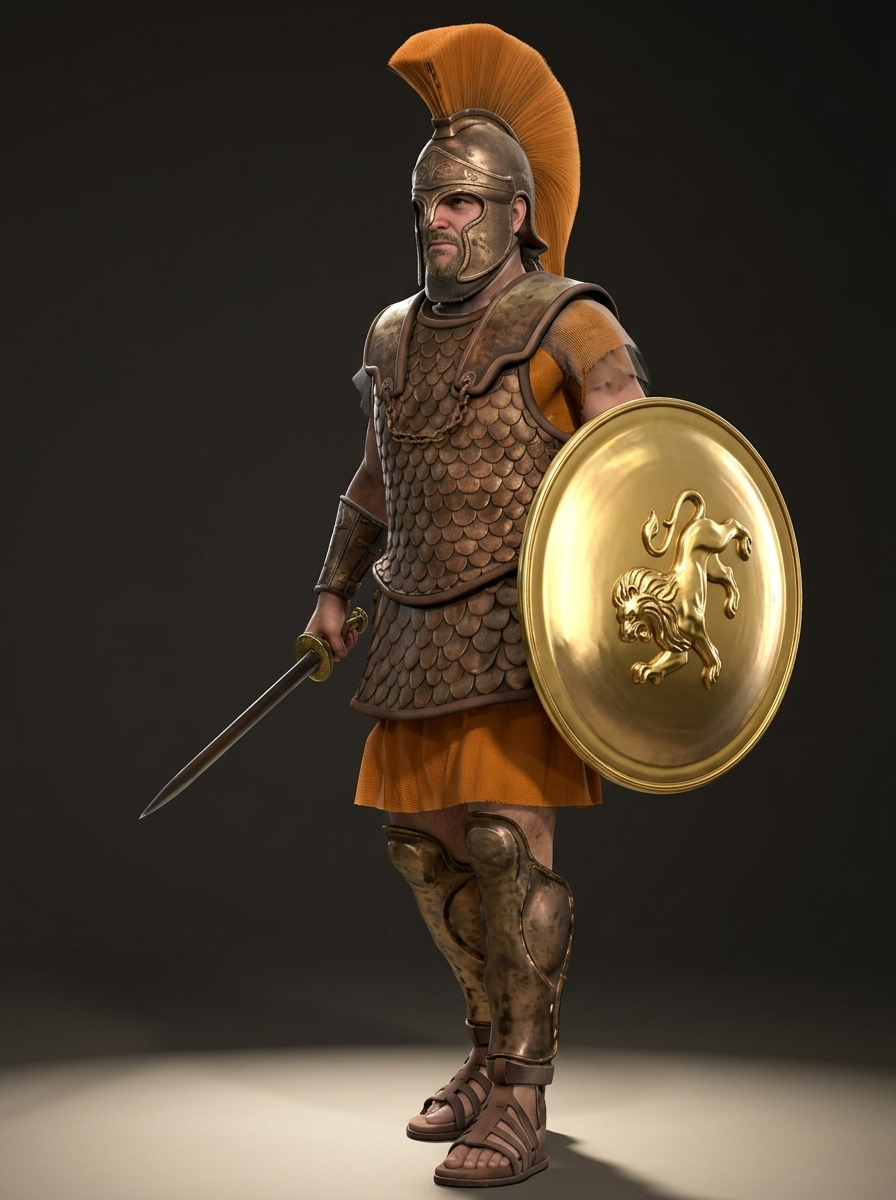
Six powers will answer the call. Two stand ready on the sand — the kingdom that minted the first coin, and the cities that answered in silver.
The kingdom of Croesus pays for loyalty by the coin, and the coin arrives faster than the enemy.
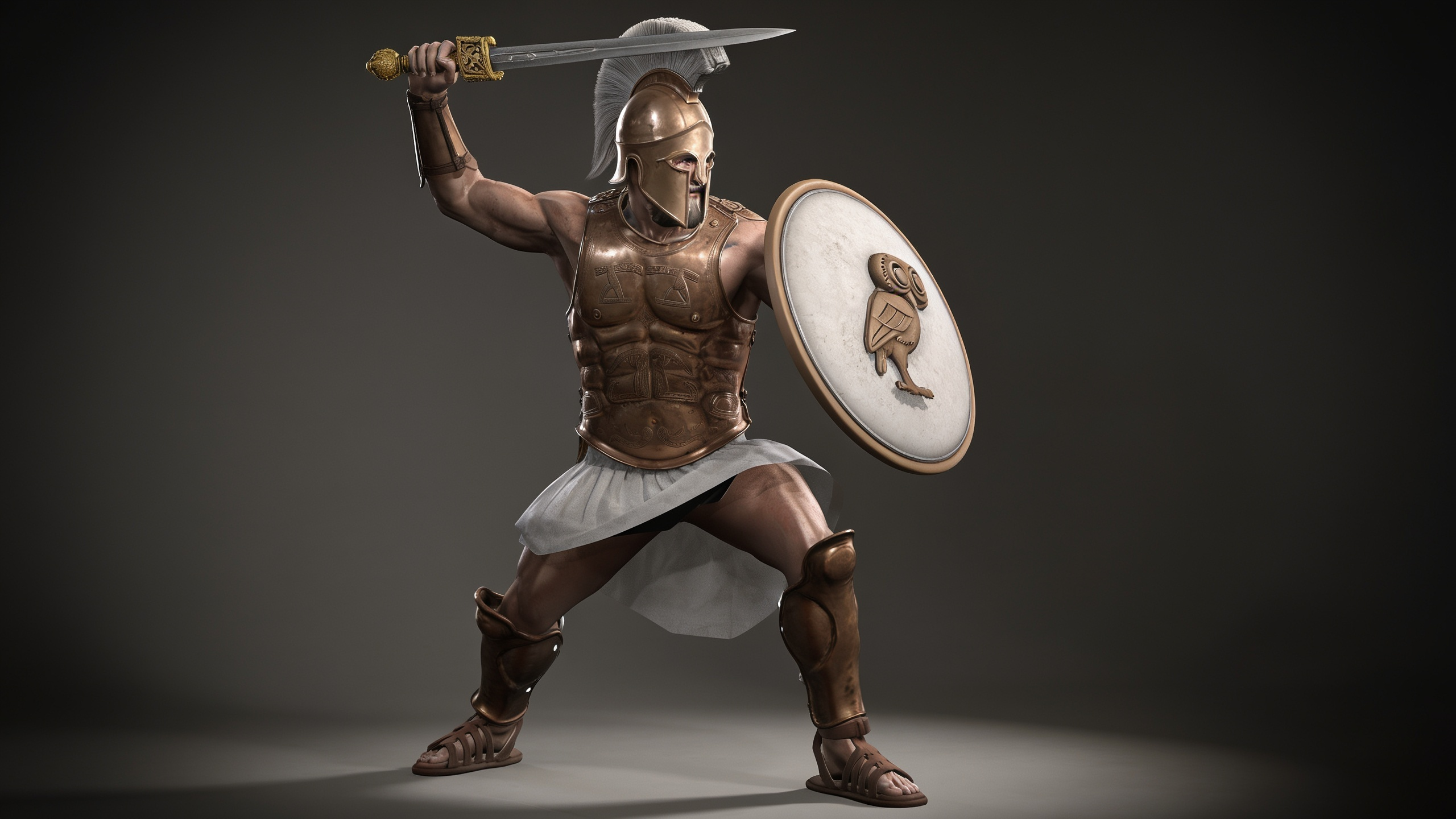
The cities argue about everything except the phalanx. When the shields lock, the argument is over.
Persia, Babylon, Egypt and the Scythians are already carved. They enter when the war widens.